
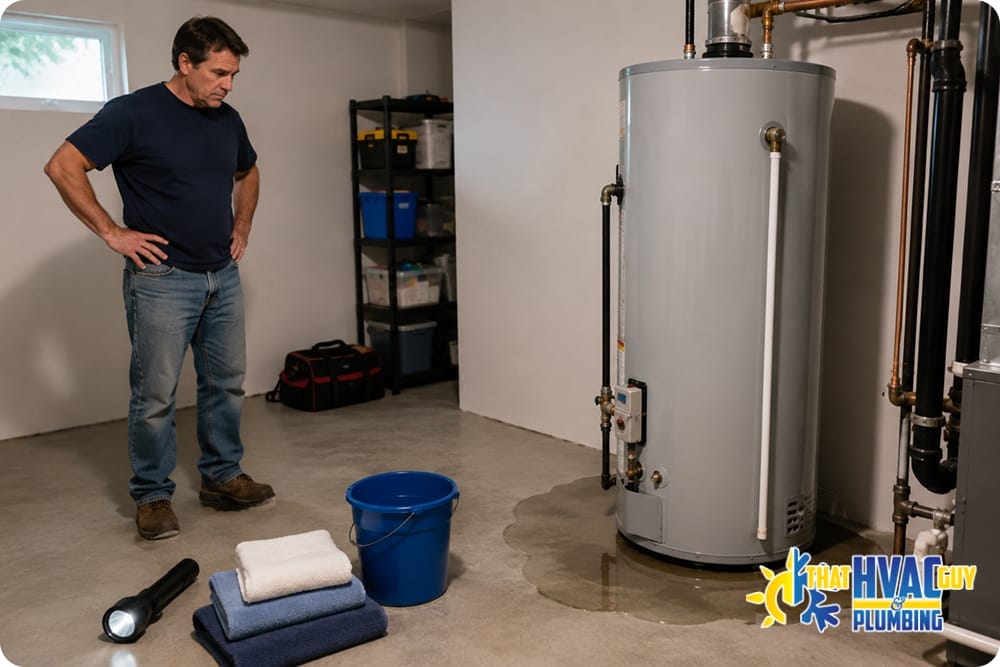
A water heater leaking from the bottom does not always mean the tank has failed. Many leaks come from repairable parts like the drain valve, T&P valve, or loose pipe fittings. Use this guide to safely shut down the unit, identify the leak source, and decide whether you need a repair or replacement.
Before you begin, grab a flashlight, paper towels or cardboard, a bucket, and your phone so you can document the leak if needed. Homeowners in Montgomery and Bucks County, PA, can also schedule same-day water heater and plumbing service if the issue requires professional repair.
Step 1: Safely Power Down the Water Heater
If your water heater is actively leaking, shut off the energy source first. This prevents the unit from heating or building pressure while you inspect the system.
Electric Water Heaters
Locate your home’s electrical panel and switch the breaker labeled “Water Heater” to the OFF position.
Gas Water Heaters
Turn the thermostat control dial to OFF or PILOT. Do not attempt to relight the pilot while the leak is active.
Gas Leak Warning
If you smell a rotten egg odor, leave the home immediately and contact your gas utility or 911 from a safe location.
Electrical Safety
Never step into standing water near outlets, wiring, or electrical components. Keep your hands dry and avoid the area until power is disconnected.
Once the power or gas supply is off, you can safely begin inspecting the water heater for signs of active leaking or component failure.
Related Article: Water Heater Repair vs. Replacement: How to Decide
Step 2: Shut Off the Water and Relieve System Pressure
Shut off the incoming water supply to reduce leaking and help prevent additional water damage.
- Locate the cold-water shutoff valve above the heater.
- Turn the valve clockwise until it fully closes.
- If the valve is stuck or will not shut off completely, turn off the home’s main water supply instead.
Next, relieve pressure inside the system:
- Open a hot water faucet nearby to relieve pressure in the system.
- Place towels or a bucket beneath the unit to control water spread.
- Take photos of the leak area for insurance or repair documentation.
For severe leaks, connect a garden hose to the drain valve and direct the water toward a floor drain or safe outdoor area. Skip this step if you cannot safely manage the discharge.

Step 3: Pinpoint the Leak Origin Zone
Do not assume the tank has failed just because water is pooling underneath it. In many cases, water from a leaking pipe or valve travels downward and creates the appearance of a water heater leaking from the bottom. Identifying the true source can help you avoid an unnecessary replacement.
- Dry the outside of the tank and the surrounding floor completely.
- Place cardboard or paper towels beneath the drain valve and around the tank base.
- Wait 10 to 15 minutes and monitor where fresh moisture appears first.
Inspect These Common Leak Points
Use a flashlight to inspect the following areas from top to bottom:
- Top Connections: Check the hot and cold water lines for dripping or corrosion.
- T&P Valve: Inspect the discharge tube for moisture or active dripping. Water released from this valve may be extremely hot.
- Drain Valve: Look for leaking threads, loose fittings, or slow drips around the valve body.
- Tank Seams: Moisture around the metal seams or lower jacket usually points to internal tank failure.
If you have a tankless or heat pump water heater, inspect the condensate drain line and nearby fittings before assuming the heat exchanger has failed.

Step 4: Diagnose the Leak and Decide Whether to Repair or Replace
Once you identify the leak source, it becomes easier to determine whether the issue requires a simple repair or a full water heater replacement. Leaks from removable components are often repairable, while leaks from the tank itself usually are not.
Repairable vs. Not Repairable
- Repairable: Leaks from drain valves, loose fittings, or faulty T&P valves are usually repairable because these components can be replaced individually.
- Possibly Repairable: Minor leaks around heating element gaskets on electric models may be repairable if corrosion has not spread through the tank.
- Not Repairable: Water leaking directly from the tank seams or bottom metal jacket usually indicates internal tank corrosion and requires replacement.
Signs Your Water Heater Is Near the End
- Rust-colored or discolored hot water.
- Rumbling or popping noises caused by sediment buildup.
- Visible rust, corrosion, or bulging around the tank.
- A unit age of approximately 8 to 12 years.
If you notice steady pooling, visible tank damage, or any potential gas or electrical hazard, contact a professional immediately. That HVAC Guy provides same-day water heater repair and upfront written estimates throughout Montgomery and Bucks County.
Step 5: Gather Info Before You Call for Service
If the tank itself is leaking from the seams or lower jacket, the internal liner has likely failed and replacement is usually necessary. For older units nearing the end of their lifespan, repair costs may exceed the value of the system. If the leak is isolated to a valve or fitting, however, repairing the unit is often the better option.
Collect these details to speed up your diagnosis and any warranty or insurance lookup:
- Photos: Take close-up photos showing where the leak is coming from.
- Model and Serial Number: Locate the rating plate on the side of the tank and record both numbers.
- System Details: Note whether the unit is gas or electric, along with its approximate age.
If replacement is recommended, ask about related upgrades such as expansion tanks, drain pans, or venting improvements. This is also a good opportunity to compare tankless water heater options if you want a longer-lasting system.
Need help finding the source of the leak? That HVAC Guy offers same-day diagnostics and upfront estimates in Montgomery and Bucks County.
Frequently Asked Questions
Is a water heater leaking from the bottom an emergency?
Yes. A water heater leaking from the bottom should always be treated as urgent, especially if the leak is continuous or involves gas or electrical components. Shut off the power and water supply immediately and contact a professional if the leak cannot be safely controlled.
Can a water heater leak from the bottom without the tank being bad?
Yes. Water beneath the tank may come from a faulty drain valve, loose connection, worn gasket, or T&P valve discharge. In some cases, water from an upper pipe connection travels downward and creates the appearance of a leaking tank. Inspecting the actual leak origin is the best way to confirm whether the tank itself has failed.
How do I check if my water heater is still under warranty?
Find the model and serial number on the rating plate attached to the tank. Most manufacturers provide online warranty lookup tools where you can check coverage details. Many water heaters include warranties ranging from 6 to 12 years, though labor and code upgrades are often excluded.
Will homeowners insurance cover water heater leaks?
Insurance coverage depends on the cause of the leak. Many policies cover sudden water damage caused by burst pipes or unexpected failures, but gradual corrosion and aging equipment are often excluded. Document the damage with photos and contact your insurance provider for clarification.
What about tankless or heat pump heaters leaking from the bottom?
Tankless and heat pump water heaters may leak because of clogged condensate drains, loose fittings, or internal component issues. Before assuming the system has failed, inspect the condensate drain and nearby connections. Shut off power and water before performing any inspection.
Can I fix this myself, or should I call a pro?
Homeowners may be able to tighten a loose fitting or stop a minor drip, but leaks involving gas lines, electrical components, or the tank body itself should always be handled by a professional. If you are unsure where the leak is coming from, schedule an inspection before the issue worsens.
When Your Water Heater Leaks, Time Matters
A water heater leaking from the bottom can range from a simple valve repair to a full tank replacement depending on the source of the leak. Shutting the system down quickly and identifying where the water is coming from can help limit damage and avoid unnecessary repairs. That HVAC Guy provides same-day water heater diagnostics and written estimates throughout Montgomery and Bucks County.


