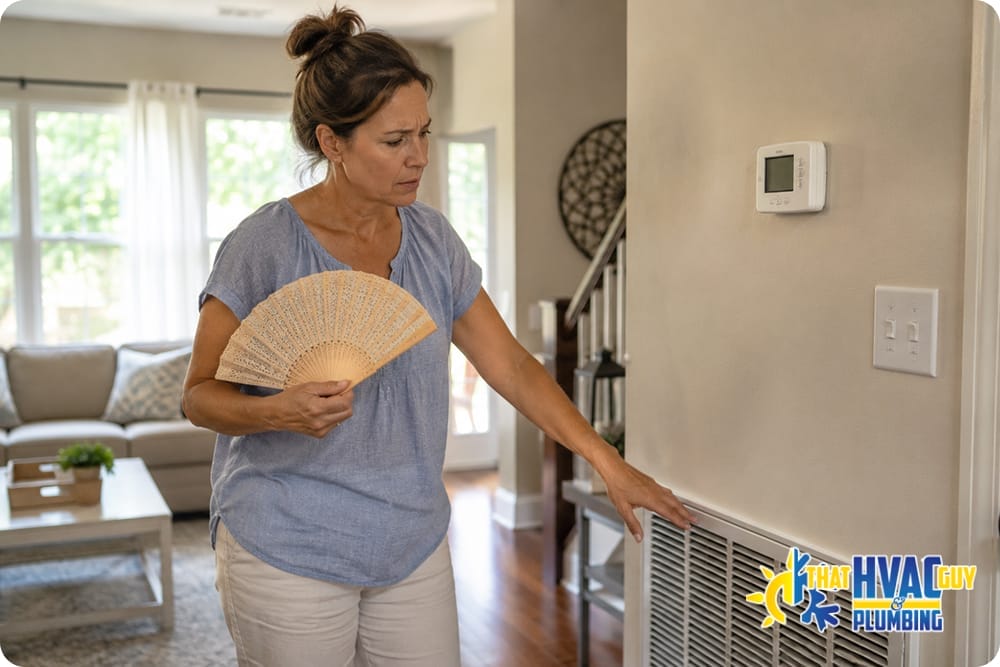
Your thermostat says “cool,” and you can hear air moving through the vents, but the temperature in your home will not drop. During the summer, many Montgomery County homeowners deal with an AC not cooling but running situation where the indoor fan works, but the system is not actually producing cold air.
In some cases, the fix is simple. In others, the problem points to a failing capacitor, airflow restriction, refrigerant issue, or compressor problem.
Below, we’ll walk through the most common reasons an AC keeps running without cooling, how to safely troubleshoot the issue, and when it’s time to call an HVAC professional. We’ll also explain how to check whether the compressor is running and how to use a Delta-T test to measure cooling performance.
Safety Note: If you smell burning, see smoke, or hear loud electrical buzzing, shut the system off at the breaker immediately. Otherwise, start with these quick troubleshooting steps.
Related Article: How to Prepare Your AC for Summer: A DIY Checklist
Airflow vs. Actual Cooling: Is Your Outdoor Unit Running?
If air is coming through the vents but it feels warm, lowering the thermostat even more usually will not solve the problem. In many cases, the indoor blower is running while the outdoor cooling components are not fully engaged.
This is one of the most common causes of an AC running but not cooling properly. Here’s a quick way to narrow down the issue:
- Check that air is blowing from the indoor supply vents.
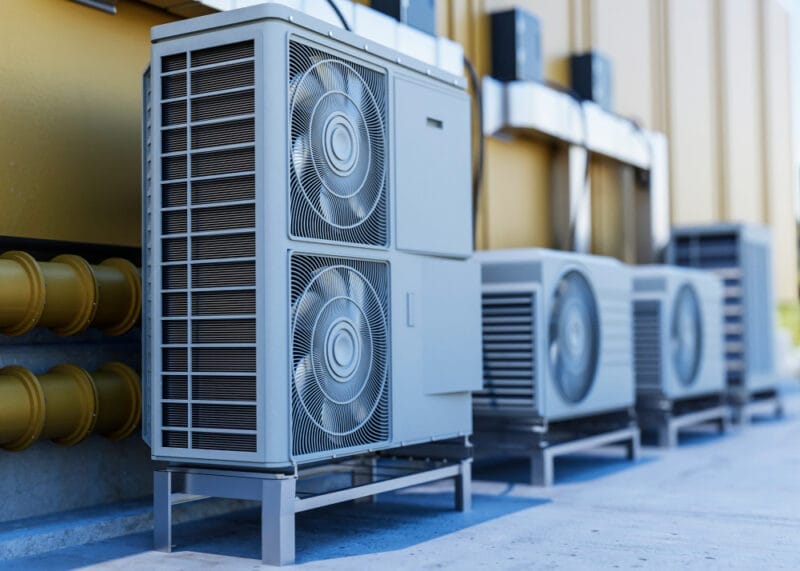
- Look at the outdoor condenser unit to confirm the fan blades are spinning.
- Listen for a deep humming or vibrating sound from the compressor. If the fan is spinning but the unit sounds unusually quiet, the compressor may not be engaging.
A spinning outdoor fan with a silent compressor often points to a failed capacitor or electrical issue.
If you see ice on the refrigerant lines or hear repeated clicking sounds, shut the system off. Continuing to run the unit can damage the compressor and lead to a much more expensive repair.
5-Minute Fixes: What to Do if Your AC is Not Cooling But Running
Before scheduling an AC repair visit, there are a few simple things you can safely check yourself. Some cooling problems are caused by airflow restrictions, thermostat settings, or dirty components that are easy to fix.
Next, inspect the air filter. If it looks gray, dusty, or clogged, replace it immediately. Most residential HVAC filters should be changed every 30 to 90 days depending on usage and indoor air conditions. Also confirm that supply vents and return grilles are not blocked by furniture or rugs.
Finally, check the outdoor condenser unit. Clear away leaves, weeds, or debris within a couple feet of the system, then gently rinse the coils with a garden hose. If airflow and cooling do not improve after these steps, the issue likely requires professional diagnosis.

The Delta-T Test: How to Know if Your AC is Actually Cooling
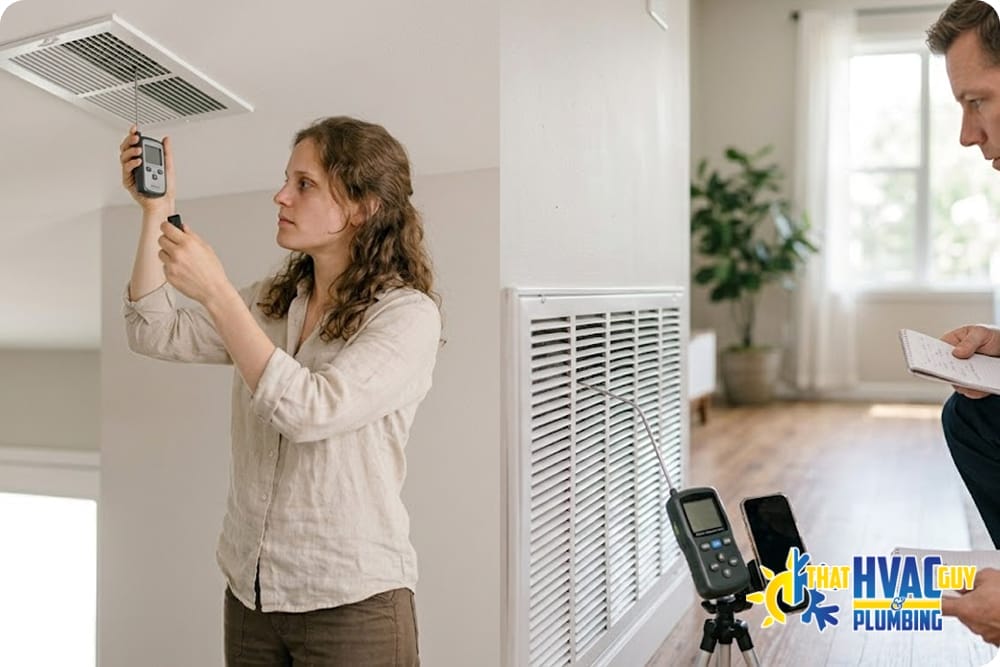
A properly functioning central AC system typically produces a temperature difference of 15 to 22 degrees Fahrenheit between the return air and supply air. This measurement is called a Delta-T test, and it is one of the best ways to evaluate whether your system is cooling correctly.
To perform the test:
- Run the AC for about 20 minutes.
- Measure the return air temperature near the air handler.
- Measure the supply air temperature at the vent closest to the indoor unit.
- Subtract the supply temperature from the return temperature.
Here’s what the results usually mean:
- 15–22 degrees: The cooling cycle is likely operating normally.
- Below 15 degrees: Possible refrigerant, compressor, or capacity issue.
- Above 22 degrees: Possible airflow restriction or frozen evaporator coil.
Sharing these readings with your HVAC technician can help speed up the diagnostic process.
If you are unsure what you are hearing or seeing during these tests, a professional HVAC inspection can help prevent unnecessary damage and identify the issue faster.
What to Do When Your AC Is Running But Not Cooling
If your outdoor fan is spinning but the air inside stays warm, listen closely to what the unit is doing. Different sounds can point to different problems:
- Repeated clicking: Failed startup attempt or control board issue.
- Short buzz followed by silence: Common sign of a failing capacitor.
- Loud, constant buzzing: Shut the system off immediately to avoid compressor or motor damage.
Homeowners can safely check breakers and clear debris around the outdoor unit, but the electrical panel should only be handled by a licensed HVAC technician. Capacitors can hold dangerous electrical charges even after the power is disconnected.
If the issue involves electrical components, scheduling an AC repair visit early can help prevent larger system damage.
Homeowners can safely check breakers and clear debris around the outdoor unit, but the electrical panel should only be handled by a licensed HVAC technician. Capacitors can hold dangerous electrical charges even after the power is disconnected.
If the issue involves electrical components, scheduling an AC repair visit early can help prevent larger system damage.
Safety Switches, Frozen Coils, and the Repair vs. Replace Choice
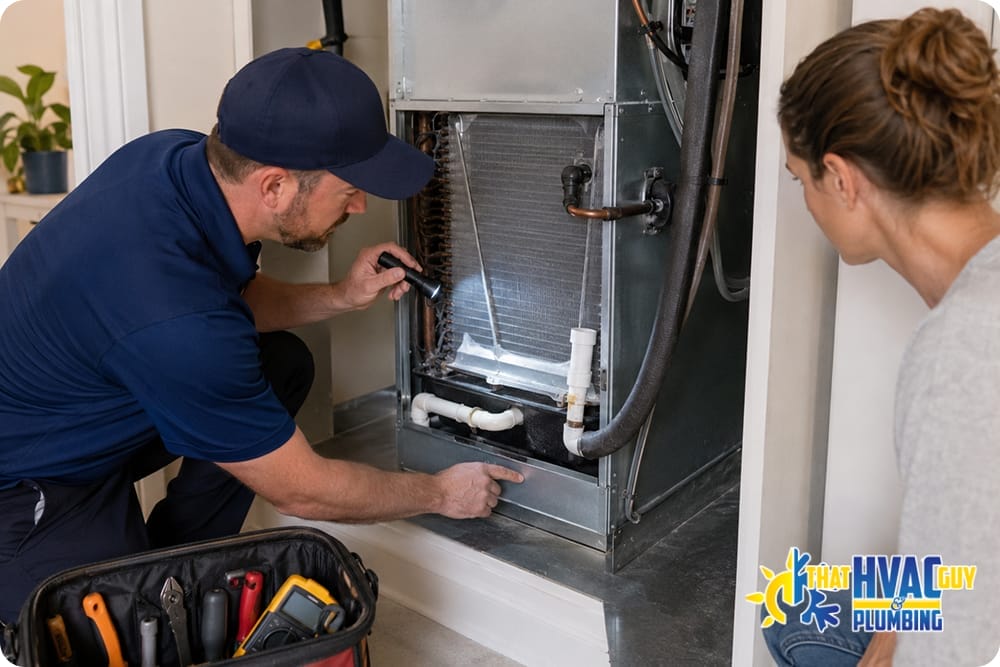
Many AC systems stop cooling because of airflow restrictions or safety shutoffs rather than complete equipment failure. One common cause is a clogged condensate drain line.
When water backs up into the overflow pan, a float switch may shut down the compressor to prevent indoor water damage. If you notice standing water near the air handler, using a wet/dry vacuum on the exterior drain line may restore operation temporarily.
If you see ice on the refrigerant lines or evaporator coil, turn the system off completely and allow it to thaw before restarting. Frozen coils are commonly caused by restricted airflow or refrigerant leaks.
Refrigerants do not get “used up” over time, so a low refrigerant level usually indicates a leak that requires professional repair. If the vents feel cool but the house stays warm, the issue may also involve disconnected ductwork, attic heat gain, or insulation problems.
Repair vs. Replace: What’s Usually Worth Fixing?
- Usually Repairable: Capacitors, contactors, clogged drain lines, and airflow-related issues.
- Depends on System Age: Refrigerant leaks and coil-related repairs.
- Often Replacement Territory: Major compressor failure or repeated refrigerant leaks on older systems.
If you are dealing with ongoing cooling issues in Montgomery County and other places like Fort Washington, a licensed HVAC technician can help determine whether the problem makes sense to repair or replace.
Your 3-Step Decision Guide When the AC Is Running but Not Cooling
Letting a struggling system run without action can lead to compressor failure, which is a far more expensive fix than catching it early. Use this three-path guide to decide what to do next:
DIY Fixes You Can Safely Try
Check that the thermostat is set to “Cool” instead of “Fan.” Replace a dirty air filter, open blocked vents, and remove debris around the outdoor condenser unit. These quick steps can sometimes restore airflow and cooling performance within minutes.
When to Shut the System Off
Turn the system off at the breaker if you see ice buildup, hear loud buzzing or clicking, smell burning, or notice the breaker repeatedly tripping. Running the AC under these conditions can damage the compressor.
When to Call an HVAC Professional
Schedule a service visit if:
- The outdoor fan is spinning but the compressor stays silent
- Your Delta-T reading is below 15 degrees
- The condensate drain pan is overflowing
- The system repeatedly freezes up
Before the technician arrives, make note of any unusual sounds, ice buildup, or temperature readings to help speed up diagnosis.
If your AC is running but your home still is not cooling properly, scheduling a professional inspection early can help prevent compressor damage and more expensive repairs later.
Frequently Asked Questions
Should I turn off my AC if it’s running but not cooling?
Yes, shut the system off if you see ice on the lines, hear loud buzzing, or suspect the compressor isn’t engaging. Running a malfunctioning unit can overheat the motor or freeze the evaporator coil, turning a minor issue into a compressor replacement.
Why is my AC running but blowing warm air?
This typically comes down to one of four causes: a tripped breaker to the outdoor unit, a failed start capacitor, restricted airflow from a clogged filter, or a refrigerant leak.
It can also be as simple as the thermostat being set to ‘On’ instead of ‘Auto,’ which runs the fan continuously even when the cooling cycle is off. Run a Delta-T test to confirm whether the system is producing any cooling.
My outdoor unit fan is spinning. Does that mean the AC is working?
No. A spinning fan only means the fan motor has power. If the fan is moving but the air inside is warm, the compressor may not be running. Listen for a deep hum or vibration at the outdoor unit. If it’s quiet beyond the fan, the compressor isn’t engaged and needs attention.
What if the air feels a little cool at the vents but the house won’t cool down?
If the air is slightly cool but the house stays warm, the system may be losing treated air to duct leaks, poor insulation, or an extreme heat load. On days over 95 degrees, a healthy AC may only hold a 20-degree difference from the outdoor temperature. Check for blocked return vents or disconnected ductwork in the attic.
Can I clear a clogged condensate drain line myself?
Many homeowners can clear a simple clog by applying a wet/dry vacuum to the exterior drain termination to pull out algae and debris. If you can’t locate the drain line or there’s standing water in the overflow pan, call a professional to avoid water damage.
How do I explain the problem to the tech so I don’t waste the service call?
Tell the technician the age of your unit, any sounds you heard, and whether the outdoor fan or indoor blower is running. Bring your Delta-T readings if you ran the test, and mention if you found water or ice. A photo of the outdoor unit’s model number also helps the tech arrive with the right parts.
If you’re in Montgomery County and need help fast, contact That HVAC Guy today.