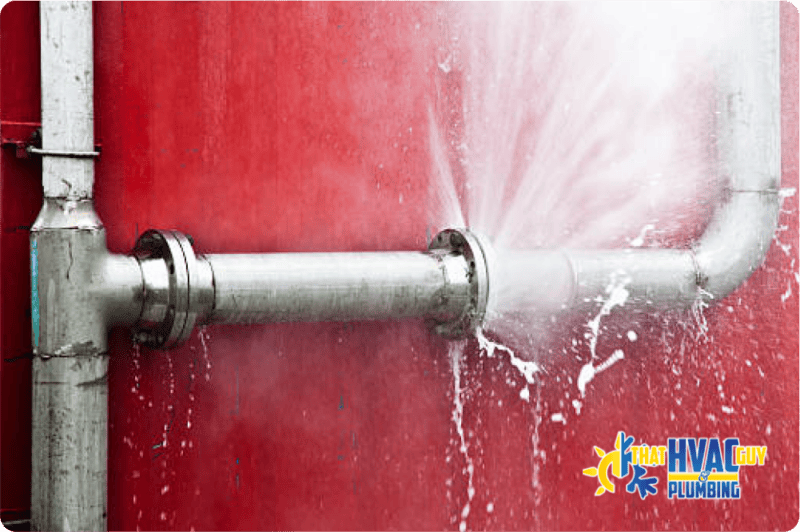
A water heater that keeps leaking may have a loose top connection, a dripping T&P relief valve, a leaking drain valve, a worn heating element gasket, or corrosion inside the tank. Water around the unit can also come from condensation, so the location where moisture first appears helps determine whether the issue may be repairable or the tank needs replacement.
Finding a puddle under your tank is stressful, but you can often narrow down the source by checking a few common leak points. This guide walks you through the immediate safety steps, how to trace where the water is coming from, and when a repair or replacement may be necessary.
First Steps: What to Do When Your Water Heater Keeps Leaking
If you see active dripping or pooling around your water heater, address safety before trying to diagnose the leak. Standing water near wiring or electrical components can create a shock hazard. If you can safely access the unit, take these steps before inspecting where the water is coming from:
- Shut off the energy source: For an electric water heater, switch the dedicated breaker to OFF. For a gas unit, turn the gas control to OFF or PILOT according to the unit’s instructions. If you smell gas, leave the home immediately and call your gas utility or 911 from a safe location.
- Shut off the water: Turn the cold-water inlet valve above the tank clockwise until it closes. If the valve will not shut off and you can safely reach the main water supply, shut off the home’s main valve instead.
- Stay clear of electrical hazards: Do not step into standing water or touch wet electrical components.
- Contain severe leaking only if it is safe: Use towels or a bucket to limit spreading water. For a severe leak, you may be able to connect a garden hose to the drain valve and direct the water to a safe drain, but skip this step if the discharge cannot be managed safely.
If water is touching electrical components, the leak is uncontrolled, or you cannot safely shut off the supply, call a professional. The expert plumbing team at That HVAC Guy & Plumbing offers 24/7 emergency plumbing availability throughout Montgomery and Bucks counties.
Is It a Real Leak or Just Condensation?
Before assuming the tank has failed, rule out condensation. A cold water heater in a humid utility room or basement can develop surface moisture that looks like a leak, especially when incoming water is much colder than the surrounding air.
A quick moisture check can help you narrow down the source:
- Dry the area: Thoroughly towel-dry the tank, fittings, valves, and floor around the base.
- Check common leak points: Look at the top connections, T&P discharge pipe, drain valve, access panels, and lower tank jacket.
- Use paper towels or cardboard: Place them beneath suspected leak points so fresh moisture is easier to spot.
- Watch where moisture appears first: Recheck the area after 10 to 15 minutes. Water returning from one fitting, valve, or tank seam is more consistent with a leak than condensation.
Condensation typically appears as a light, even film of moisture on the tank surface, while a plumbing leak is more likely to leave a defined drip path, rust staining, or recurring pooling in one area. A dehumidifier may help reduce condensation in a damp utility room, but if moisture continues to return or you cannot identify the source, have the water heater inspected.
How to Trace Where Your Water Heater Is Leaking From
Water travels, so a puddle at the bottom of the heater may actually start at a fitting near the top. Begin at the highest visible moisture point and follow the wet path downward.
Top leaks

Check the hot- and cold-water connections, unions, and nipples for visible moisture, corrosion, or loose fittings. Also inspect around the anode rod connection at the top of the tank, where moisture can resemble a leaking supply pipe. Leaks from external connections may be repairable, but significant corrosion should be inspected before parts are tightened or replaced.
Side leaks
Inspect the temperature and pressure (T&P) relief valve and its discharge pipe for active dripping. Repeated discharge can be caused by excessive water pressure or thermal expansion, but overheating, debris, or a faulty valve can also be involved. Because the T&P valve is a critical safety device, never cap or plug its discharge pipe.
Bottom leaks
Check the drain valve first because a slow drip there may be repairable. If water is seeping from the lower tank jacket itself and the fittings above it are dry, that usually indicates internal tank failure. Review the water heater leaking from bottom guide for a more detailed diagnosis and the next steps.
If water appears around or behind an access panel on an electric water heater, a heating element gasket may be leaking. Keep the power off and have the unit inspected before using it again.
Why a T&P Valve Can Keep Dripping After Replacement
If a T&P valve keeps dripping after it has been replaced, excessive water pressure or thermal expansion in a closed plumbing system may be the underlying cause. As water heats, it expands, and a missing, undersized, or failed expansion tank can allow system pressure to rise until the relief valve discharges. Residential T&P valves are commonly designed to relieve excessive pressure at up to 150 psi, so recurring discharge should be diagnosed rather than ignored.
An expansion tank should not be diagnosed simply by pressing its air valve while the plumbing system is pressurized. Proper testing involves isolating the tank, relieving the water pressure, and checking its air pre-charge against the home’s incoming water pressure.
A plumber can also test the pressure-reducing valve (PRV) and determine whether excessive pressure, thermal expansion, or the T&P valve itself is causing the discharge.

Repair or Replace? A Quick Decision Framework
The leak source, age of the unit, and overall condition of the tank all help determine your next move:
- Repair may make sense: Leaks from loose external fittings, a drain valve, or a heating element gasket may be repairable. T&P valve discharge may also be correctable once the underlying pressure, thermal expansion, temperature, or valve issue is identified.
- Replacement is more likely: Water leaking directly from the tank body or lower jacket, severe tank corrosion, or repeated failures can indicate that replacement is the safer long-term option. A unit that is 10 years old or older deserves closer evaluation, but age alone does not automatically mean it must be replaced.
- Call immediately: Active flooding, water near electrical components, a suspected gas leak, or a leak you cannot safely shut off requires immediate attention.
Not sure which category your water heater falls into? The repair vs replacement guide explains the other factors to consider before deciding which option makes sense.
That HVAC Guy & Plumbing can inspect the system, explain the available repair or replacement options, and provide upfront pricing before approved work begins. Plumbing work is backed by the company’s 100% Satisfaction Guarantee.
Frequently Asked Questions About Water Heater Leaks
Is a leaking water heater an emergency?
A leaking water heater is an emergency when water is flowing uncontrollably, pooling near electrical components, or creating a gas or electrical safety risk. If it is safe to do so, shut off the appropriate energy source and cold-water supply. A controlled slow drip may be less urgent, but it should still be inspected promptly before the leak worsens.
Why is my water heater leaking from the bottom but still working?
A puddle under a water heater does not automatically mean the inner tank has failed. Water can travel down from a top fitting or T&P valve, and a leaking drain valve or condensation can also create moisture near the base. If water is coming directly through the lower tank jacket or tank seams, internal tank failure is more likely and replacement is usually necessary.
Can I keep using hot water if the leak is small?
The safest choice is to stop using a leaking water heater until the source has been identified, especially if there is active leaking near electrical or gas components. Continued operation can allow a small problem to worsen or cause additional water damage. Keep the system shut down if you cannot confirm that it is safe to operate.
My T&P valve keeps dripping. Should I just replace it again?
Not necessarily. Repeated T&P valve discharge can result from excessive water pressure, thermal expansion, overheating, debris, or a problem with the valve itself. Residential incoming water pressure typically should not exceed 80 psi, and a failed or improperly charged expansion tank can also cause recurring pressure spikes. Have the system pressure and expansion control checked before replacing the valve again.
Does hard water make leaks more likely?
Hard water can contribute to scale and sediment buildup inside a water heater. Over time, those mineral deposits can reduce heating efficiency, increase stress on components, and contribute to corrosion or premature wear. If scale is a recurring problem in your home, water filtration and water softening services may help reduce mineral buildup and protect plumbing equipment.
Need Help Finding the Source?
A recurring water heater leak should not be ignored, even when the amount of water seems small. Identifying the source early can help limit water damage and determine whether you need a minor repair or a full replacement. That HVAC Guy & Plumbing provides professional water heater service for homeowners in Horsham, Hatfield, Conshohocken, and communities throughout Montgomery and Bucks counties, with clear recommendations and upfront pricing.